
KEYNOTES
Keynotes
Boundary-Layer Noise in High-Speed Flows: From Fundamental Physics to Hypersonic Vehicle Design
Short Abstract
Pressure fluctuations generated beneath high-speed boundary layers represent a major source of aeroacoustic loading on supersonic and hypersonic vehicles, particularly during ascent, with direct implications for structural integrity and vehicle design. This lecture will provide an overview of the physics and modelling of high-speed boundary-layer noise, encompassing fully turbulent and transitional regimes as well as the unsteadiness associated with shock-wave/boundary-layer interactions. Combining evidence from high-fidelity numerical simulations and experimental data, the talk will address the problem from both fundamental and applied perspectives, highlighting current predictive capabilities, their implications for high-speed vehicle design, and the key challenges ahead for future hypersonic flight.
Bio of Speaker
|
|
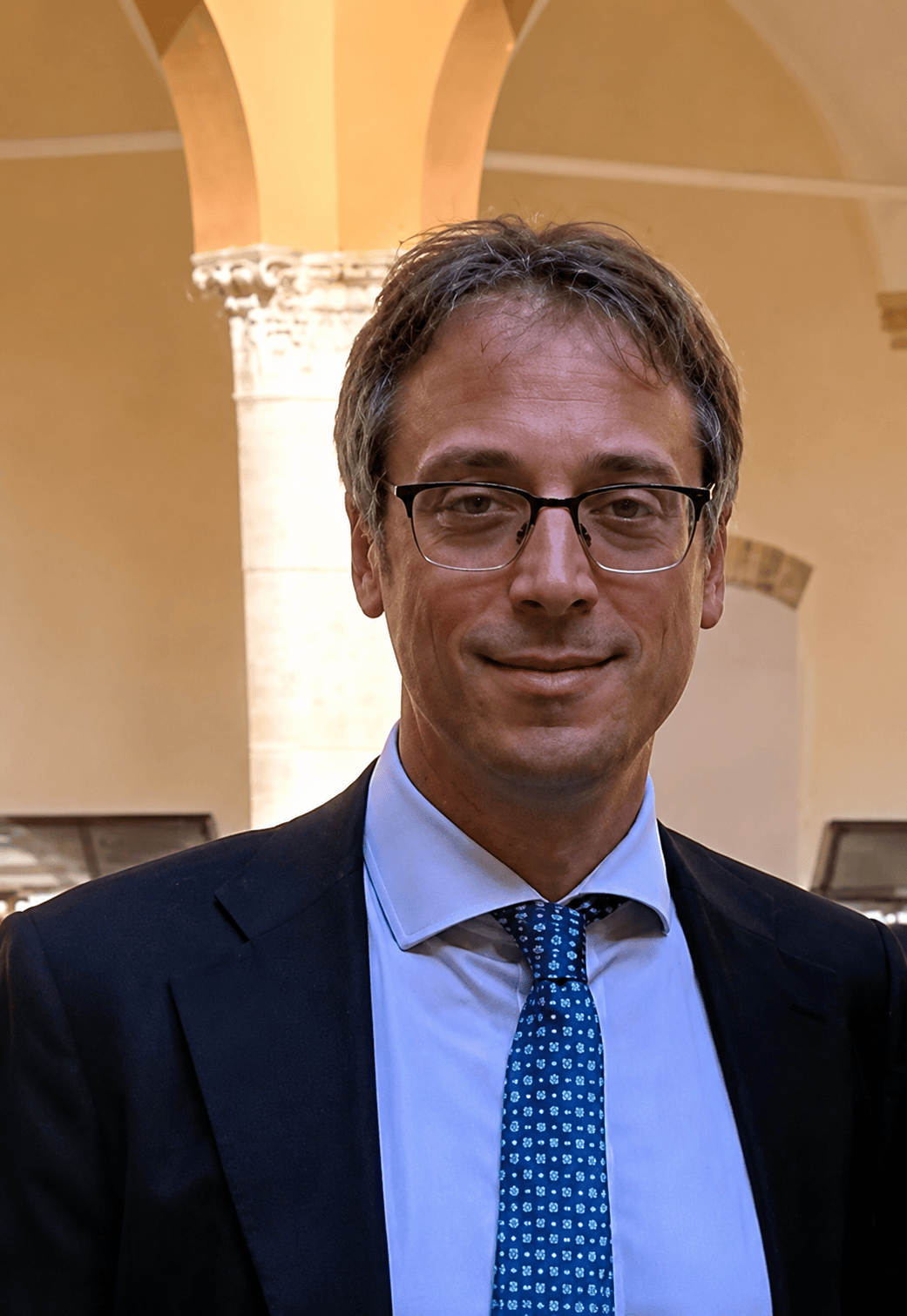
Matteo Bernardini is Associate Professor of Fluid Dynamics at the Department of Mechanical and Aerospace Engineering, Sapienza University of Rome. His research focuses on the development and application of advanced numerical methods for compressible turbulent flows, with applications to aerodynamics, aeroacoustics, and aerospace propulsion. His work spans high-fidelity simulations of wall-bounded turbulence, supersonic and hypersonic boundary layers, shock-wave/boundary-layer interactions, and launch-vehicle aeroacoustics. He is the principal developer of STREAmS, an open-source GPU-accelerated solver for compressible turbulent flows used by research groups worldwide. He has authored more than 110 scientific publications and has served as Principal Investigator of competitive research, HPC, and industrial programmes funded by European and national institutions and agencies, including the European and Italian Space Agencies. Since 2022, he has been continuously included in the list of the World's Top 2% most-cited scientists.
Some Progresses in High Speed Airbreathing Research at CARDC
Short Abstract
Twenty years ago, stimulated by the sustained interest in the development of air-breathing propulsion systems—as evidenced by the HIFiRE programs, as well as the European LAPCAT HEXAFLY-INT (High-Speed Experimental Flight Vehicles) project—the Air-breathing Hypersonics Laboratory at CARDC initiated a research program on high-speed air-breathing propulsion. To date, substantial progress has been achieved across several fields, including the development of experimental facilities, CFD methodologies, free-jet model engine experiments, propulsion-airframe integration, and modeled flight testing. All these research areas continue to make steady progress.
Successful experience has been achieved in the computational validation of aero-propulsion through experiments conducted in a large-scale (2.4 m exit nozzle) short-duration facility. Predictions made by the CARDC AHL-3D code are in good agreement with test data (AHL-3D predictions in March 2011 were compared with measurements, with validation completed in July 2011). This facility can be utilized in a cost-effective and highly efficient manner for aero-propulsion research with detailed configurations (vehicle length = 3 m, Mach 6–7). To date, more than 2,000 test runs have been completed, including some tests supported by the National Natural Science Foundation of China (NSFC). Due to its high efficiency in scramjet research applications, positive thrust was successfully obtained in this facility within just three years. Other valuable experiments include the precise control and measurement of two-body separation over a duration of approximately 150 ms, as well as the direct measurement of the acceleration of an aero-propulsion model (length > 3 m) using maglev gliding, thereby directly obtaining the scramjet thrust with and without combustion within a one-second duration. Currently, the Mach number has been extended from 7 to 8, the total temperature from 850 to 2200 K, and the test time from 0.2 s to 1 s.
In addition to AHL-3D CFD simulations and experiments in short-duration facilities, CARDC also conducted kerosene-fueled scramjet flight tests in November 2013 to further validate the research findings. Launched by a rocket, the flight experienced three stages—variable Mach number (5–6), quasi-steady state, and angle-of-attack variation (−3° to 5°)—within a 20-second duration, achieving a combustion efficiency of 80%–90%.
Air-breathing scramjet propulsion at Mach 8–10 is currently a significant and challenging research area. CARDC has developed several shock tunnels for high-Mach-number testing, including a high-energy shock tunnel (total temperature 5000 K, total pressure 120 MPa) and a high-enthalpy expansion tube (velocity 11.5 km/s), though their testing durations are limited to only a few milliseconds. Furthermore, a new facility with a 50–100 ms duration, utilizing two-stage heating at approximately 3000 K, is currently under development for Mach 8–9 conditions.
Research on supersonic combustion flows at Mach 10 in shock tunnels includes direct-connect combustor experiments utilizing CH4 and C2H4 fuels as well as their mixtures, and 3-meter-long free-jet model tests utilizing H2 fuel. The measurement system comprises pressure and heat transfer sensors, high-speed Schlieren imaging, high-speed photography, and spectrometers. In addition, experimental results from the CARDC-designed hypermixer combustor utilizing H2 and hydrocarbon fuels were compared with AHL-3D computations. Flight testing at Mach 10 using an H2-fueled scramjet model will be conducted, which is expected to obtain valuable inlet flow data and accurate specific impulse measurements.
Based on domestically developed technologies such as PLIF, PIV, molecular spectroscopy temperature measurement, spontaneous fluorescence imaging, and focused Schlieren, CARDC and its collaborators have established a high-temporal-resolution, multi-field, and multi-parameter synchronous testing technology. This enables the simultaneous acquisition of chemical species concentrations, flow velocities, temperatures, and flow field structural patterns during the combustion process at the same instantaneous moment. This has significantly enhanced the validation of AHL CFD simulations for supersonic turbulent chemically reacting flows.
Despite substantial research progress in high-Mach-number air-breathing propulsion systems, challenges remain in enhancing thrust and effectively reducing drag. Unlike the Mach 5–7 regime, current ground test facilities (in terms of duration, size, TtT_tTt, and PtP_tPt) cannot fully duplicate all flight conditions at Mach 10. Building upon the existing massively parallel processing (MPP) AHL-3D CFD code—which played a crucial role in the successful development of Mach 5–7 aero-propulsion systems—and leveraging domestic computing power, AHL-3D is expected to take primary responsibility for the design of Mach 10 systems. This will be achieved by improving physical and chemical models, incorporating adaptive chemical acceleration technology, and integrating AI-based turbulent combustion models.
Regarding high-temperature gas effects, CARDC’s NNW HyFLOW—a high-speed flow simulation software developed for the National Numerical Wind Tunnel (NNW) project—has already accounted for thermodynamic and thermochemical non-equilibrium effects in high-Mach-number propulsion. The optimal air-breathing propulsion configuration will be the one capable of high-speed flight at the lowest recurring operating costs and with acceptable environmental impacts.
The era of high-Mach-number flight powered by air-breathing propulsion is dawning, driven by the diligent efforts of us all.
Bio of Speaker
|
|
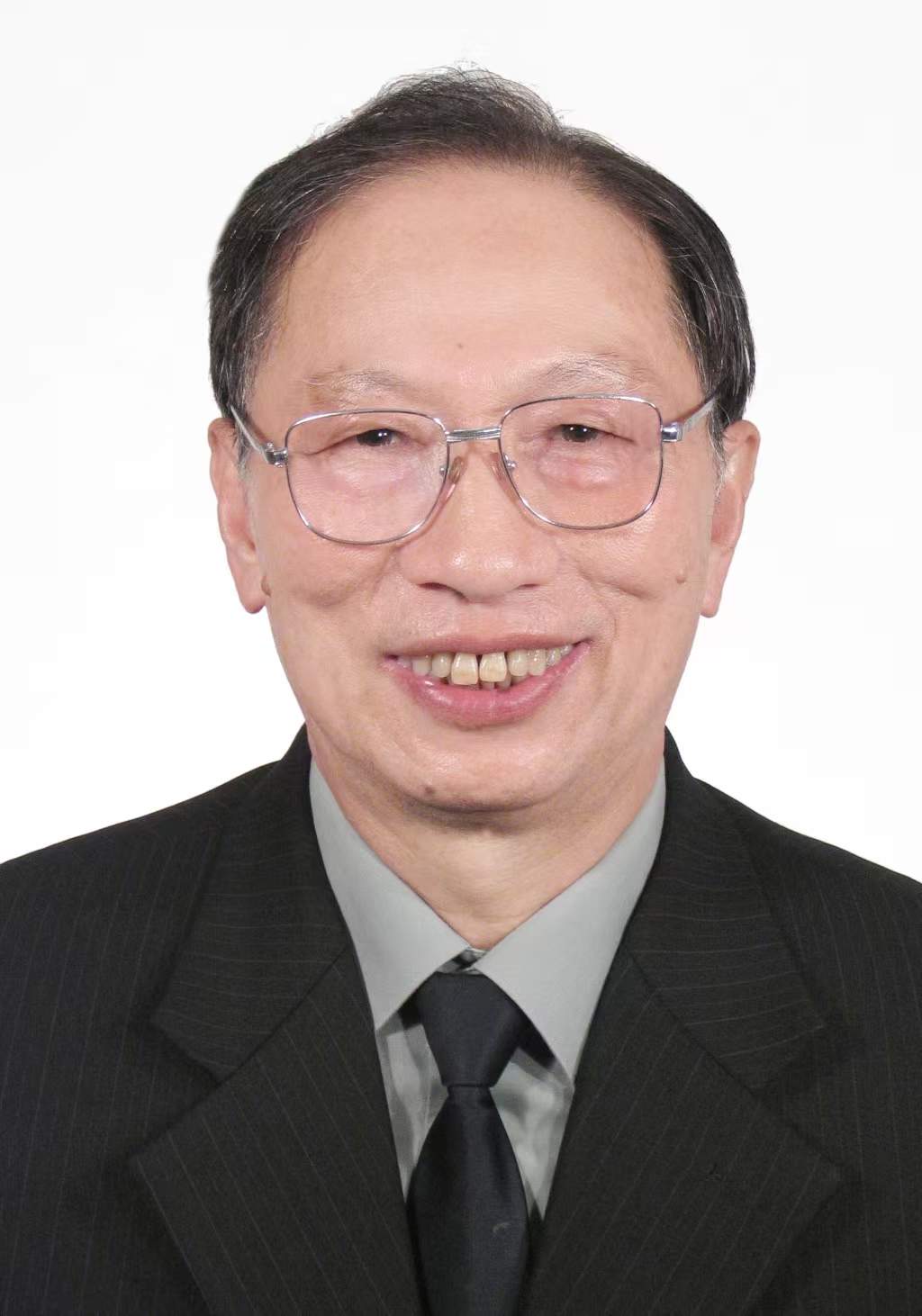
Jialing Le, member of the Chinese Academy of Engineering, he completed his graduate studies and began working at the Beijing Aerodynamics Research Institute until 1971. Since 1971, he has been affiliated with the China Aerodynamics Research and Development Center (CARDC), where he has held various leadership positions, ultimately, as the Chief Engineer of the Center. Currently serves as the Editor-in-Chief of the Journal of Experimental Fluid Mechanics. Previously served as the Deputy Director of the Chinese Aerodynamics Research Society. Elected as a member of the Chinese Academy of Engineering in 1995. Received the "He Liang He Li Fund" Science and Technology Progress Award in 2007. Honored with the Chinese Aerodynamics Achievement Award in 2019. Currently, he serves as a Senior Researcher at the center. Jialing Le has long been engaged in research in the fields of highspeed aerodynamics ground facilities and test technologies, reentry aero-physics, rocket aerodynamics, airbreathing propulsion, and flight vehicles. His major research achievements include leading the construction and research of wind tunnel equipment for the manned spacecraft project and the related technology for rocket stage separation. He has also made groundbreaking contributions to the development of various pulsed experimental devices, such as the 150mm hydrogen-oxygen shock tube, the 30 million joule stored energy discharge shock tube, the gas-solid two-phase powder shock tube, the optical shock tube, and pulsed wind tunnel for the high-altitude rocket plumes. Thus he has provided significant solutions to key aerodynamic design challenges in launch vehicles, stage separations, and flight vehicles.
Supersonic Combustion in the Computational Era: From Experiments to Predictive Simulations
Short Abstract
Supersonic combustion is governed by the complex interaction of shock waves, turbulence, chemical kinetics, and heat release, presenting significant challenges for both experimental and computational analysis. Advances in high-performance computing have established Large Eddy Simulation (LES) as a powerful tool for capturing the unsteady flow physics, turbulence-chemistry interactions, and shock-flame dynamics that characterize high-speed reacting flows. This keynote reviews the fundamental physics of supersonic combustion and demonstrates how LES is enabling improved understanding, prediction, and design of next-generation hypersonic propulsion systems.
Bio of Speaker
|
|
Christer Fureby is Professor of Heat Transfer and Head of the Heat Transfer Division at Lund University, Sweden. He also serves as Director of the Swedish competence centers CESTAP and AdTherM, which promote collaboration between academia, industry, and government in clean aviation propulsion and power generation and thermal management, respectively. Prior to joining Lund University, he was Research Director and Head of Computational Fluid Dynamics and Combustion at the Swedish Defence Research Agency (FOI). His research spans high-speed aerodynamics, turbulence, reacting flows, propulsion, and large-scale computational fluid dynamics. He has authored more than 270 scientific publications, is an Associate Fellow of AIAA, and received the 2020 Combustion Institute Research Excellence Award.
Yunxiao Pathfinder: In-Orbit Demonstration of an Air-Breathing Electric Propulsion System for Very Low Earth Orbit
Short Abstract
This presentation reports the in-orbit flight demonstration of the Yunxiao Pathfinder, a technology pathfinder spacecraft developed to investigate the feasibility and key technologies of air-breathing propulsion in very low Earth orbit (VLEO). The mission is designed primarily as a technology demonstration, rather than an operational mission, and focuses on the experimental validation of an atmospheric intake and compression system and an electric propulsion system using air as the propellant. In contrast to ground-based experiments, the flight demonstration provides an opportunity to assess the coupled performance of atmospheric intake, gas processing, electric propulsion, spacecraft operations, and the surrounding rarefied atmosphere under realistic orbital conditions.
Bio of Speaker
|
|

Heji Huang has worked extensively in the field of thermal plasma dynamics, with particular emphasis on flow stabilization and energy transport processes in high-speed plasma flows. In recent years, he has led the development of a long-duration ultra-high-speed rarefied-gas wind-tunnel facility and conducted systematic investigations into the fundamental physics of rarefied high-speed flows and their interactions with materials and structures.
To be updated......